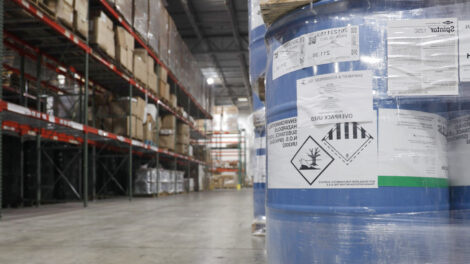
South Florida exporters moving dangerous goods by ocean usually have two realistic gateway choices: PortMiami in Miami-Dade County or Port Everglades in Broward County. Both handle containerized hazmat cargo, sit within reach of a dense carrier network, and require the same IMDG Code compliance regardless of terminal. What actually matters for planning is trade lane fit, drayage distance from your facility, and how a given carrier’s terminal handles dangerous goods acceptance. This post covers what’s genuinely comparable between the two ports and where you need to call your carrier or forwarder directly.
PortMiami at a Glance
PortMiami sits in Miami-Dade County and has long been positioned around Latin America and Caribbean trade lanes, alongside broader global service strings. Its proximity to MIA cargo operations also makes it a natural fit for shippers who split freight between ocean and air. For exporters based in Miami-Dade, or shipping regularly to the Caribbean and Latin America, PortMiami is often the shorter drayage run and the more familiar routing.
Port Everglades at a Glance
Port Everglades, in Broward County, also carries a strong Caribbean and Latin America trade lane presence, with additional coverage that varies by carrier and season. Shippers based in Broward or Palm Beach County frequently find it the shorter drayage option, and some carriers route specific strings through Everglades rather than Miami, or vice versa, depending on their network at any given time. Confirm which port a carrier prioritizes for your lane at time of booking rather than assuming based on past experience.
IMDG Documentation Requirements Apply Either Way
Regardless of which port your container moves through, the same core IMDG Code documentation obligations apply. At minimum, you should expect to prepare:
- A Dangerous Goods Declaration (DGD) that matches the IMDG Code’s current data element requirements, including UN number, proper shipping name, class/division, packing group, and emergency contact information.
- A Container/Vehicle Packing Certificate confirming the container was packed and secured in accordance with IMDG requirements.
- Correct marking, labeling, and placarding on packages and the container itself, matching the classification on the DGD.
- Segregation documentation showing incompatible materials were not stowed together, consistent with the IMDG segregation tables.
None of this changes based on terminal choice — a DG declaration prepared for a PortMiami export must meet the same IMDG standard as one prepared for Port Everglades. Where they diverge is how each carrier’s terminal operations system ingests and verifies that paperwork, which is carrier-specific, not port-wide. For a deeper look at segregation rules, see our breakdown of IMDG segregation groups for Miami-Dade and Broward exporters, and confirm your classification with a hazmat compliance review before booking.
Cut-Offs and DG Approval Lead Times: A Planning Concept
Every ocean carrier builds in a dangerous goods cut-off earlier than the general cargo cut-off, since DG paperwork needs manual review before a container can be loaded. What that lead time actually is, in hours or days, varies by carrier, terminal, vessel, and sometimes commodity class. We won’t state a specific window here because it changes shipment to shipment at both ports. The planning takeaway: build your DG paperwork and approval process to be ready well ahead of the general cargo cut-off, not up against it, and confirm the actual DG cut-off with your carrier at time of booking. A missed cut-off typically means a rolled booking to the next sailing, which can cascade into real cost on time-sensitive freight.
Drayage Distance: Miami-Dade vs. Broward Warehouses
Drayage — the short truck move from a warehouse or CFS to the container terminal — is one of the more concrete differences between the two ports, and it’s simply a function of geography. A facility in Miami-Dade County generally has a shorter, more predictable drayage run to PortMiami, while a facility in Broward County is generally closer to Port Everglades. For hazmat cargo, shorter drayage legs reduce the window a placarded container is on the road, which matters for security and for tightening the window ahead of a DG cut-off. If your warehousing and repacking operation sits in Miami-Dade — as with facilities near MIA cargo — that geography naturally favors PortMiami routing for time-sensitive freight, though it doesn’t rule out Everglades when a carrier’s service fits the lane better. Our hazmat warehousing operation in Miami-Dade is built with this drayage math in mind.
Container Stuffing and Segregation Planning
Stuffing plans need to account for IMDG segregation before the container reaches the terminal — this isn’t fixed at the port. Key considerations include:
- Confirming segregation group compatibility between all commodities going into the same container.
- Blocking and bracing to IMDG standards so cargo doesn’t shift in transit.
- Making sure package-level markings and labels remain visible and legible after stuffing, not obscured by other freight.
- Documenting the stuffing process with a properly executed packing certificate.
Getting this done correctly and early, at your warehouse rather than at the terminal gate, avoids the kind of last-minute rejection that can blow through a DG cut-off at either port. This is exactly the kind of work covered under UN-spec repacking and container stuffing services, and it pairs well with the classification detail in our IMDG Code Amendment 42-24 overview.
Verified Gross Mass (VGM)
VGM obligations under the SOLAS container weight verification requirement apply to every export container leaving either port — not port-specific, and no more optional for hazmat than for general cargo. The shipper must submit a verified gross mass to the carrier by its VGM cut-off, using either Method 1 (weighing the packed container) or Method 2 (calculating cargo weight plus tare weight, where permitted and documented). Missing the VGM deadline is one of the more common, and avoidable, reasons a container gets held back from loading.
How to Decide Between the Two Ports
| Factor | Favors PortMiami | Favors Port Everglades |
|---|---|---|
| Warehouse/CFS location | Miami-Dade based | Broward based |
| Trade lane | Depends on carrier’s current service string | Depends on carrier’s current service string |
| Air/ocean coordination | Closer to MIA cargo operations | N/A |
| Carrier DG acceptance | Varies by carrier — confirm per booking | Varies by carrier — confirm per booking |
In practice, the decision comes down to which port your ocean carrier services for the lane you need, combined with drayage economics from your facility. A shipper in Palm Beach or Broward moving to the Eastern Caribbean might find Port Everglades service more direct; a shipper in Miami-Dade moving to Central America might find PortMiami’s carrier mix a better fit. Neither port is categorically better for hazmat — the right answer depends on commodity, destination, and carrier relationships. If you’re exporting to Latin America or the Caribbean, our guide on exporting hazmat to Latin America and the Caribbean from Miami covers lane-specific considerations in more depth.
Whichever port you choose, specific terminal rules, DG cut-offs, and acceptance windows vary by carrier and terminal, and they change. Confirm every detail — cut-off times, DG approval requirements, VGM deadlines, and terminal-specific procedures — directly with your ocean carrier or terminal operator for each booking, and verify your documentation against the current edition of the IMDG Code before cargo moves. If you’d rather have someone coordinate that for you, our team can help scope the move through a hazmat freight quote or a direct consultation.
Frequently asked questions
Is PortMiami or Port Everglades better for hazmat ocean exports?
Neither port is categorically better. The right choice depends on which port your specific ocean carrier services for your trade lane, how far your warehouse or CFS is from each terminal, and that carrier’s current dangerous goods acceptance procedures. Both ports require full IMDG Code compliance regardless of which one you use.
Do IMDG documentation requirements differ between PortMiami and Port Everglades?
No. The Dangerous Goods Declaration, packing certificate, marking, labeling, and segregation documentation required under the IMDG Code apply the same way regardless of which port your container moves through. What varies by carrier and terminal is the internal process for submitting and approving that paperwork ahead of a vessel’s cut-off.
How much lead time should I plan for a hazmat container’s DG cut-off?
There is no single answer — DG cut-offs vary by carrier, terminal, vessel, and sometimes commodity class at both PortMiami and Port Everglades. Build your documentation and internal approval process to be ready well ahead of the general cargo cut-off, and confirm the specific DG cut-off and approval window with your carrier for each booking.