Miami is the natural hub for hazardous goods moving between North America and the markets to the south. Batteries, lubricants, aerosols, agricultural chemicals, paints, medical shipments with dry ice — the region’s demand runs straight through South Florida’s airport and seaports. But exporting dangerous goods adds a second layer of complexity on top of domestic rules: international regulations, destination-country quirks, and transshipment logistics.
Here’s the playbook we run for exporters every week.
Why Miami wins for DG exports
Geography does the heavy lifting: MIA offers deep flight frequency into Latin American and Caribbean destinations, and Port of Miami and Port Everglades sail weekly services to the islands and the mainland. For dangerous goods specifically, the gateway advantage compounds — DG cargo needs earlier cutoffs, more precise documentation, and occasionally rework, and having your cargo staged minutes from the uplift point makes every one of those problems recoverable. Freight staged a thousand miles away has no such slack.
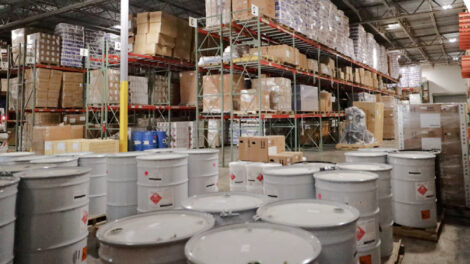
That’s the operational case for consolidating export inventory in a Miami hazmat warehouse — orders build and hold compliantly, then release against vessel or flight schedules.
Mode choice for the region
Air suits urgent, high-value, and small-batch DG — but IATA quantity caps and per-package limits mean some commodities can’t fly economically, and lithium battery rules restrict passenger aircraft options entirely. Ocean handles drums, IBCs, and consolidated pallets economically, with the IMDG Code governing; weekly island services make even LCL dangerous goods workable when consolidated properly. For Caribbean lanes, the practical pattern is often hybrid: truck consolidation in Miami, ocean to the island, with air reserved for emergencies.
Each mode changes the documentation: IATA Shipper’s Declaration for air, IMDG DG Declaration plus container packing certificate for ocean, and both layered over export requirements — EEI filing where required, destination-country import rules for the commodity, and carrier-specific DG acceptance policies that vary more than shippers expect.
Where export DG shipments go wrong
The classic failures: a declaration citing the wrong regulatory edition; consolidations mixing incompatible classes in one container; batteries prepared for ground that need air-compliant packaging when the schedule changes; destination rules (like registration requirements for certain chemicals) discovered at the port of discharge; and packaging that survived the truck but won’t survive an ocean crossing. Every one is preventable with a pre-shipment review — which is why our compliance team checks classification, packaging, segregation, and paperwork before cargo hits the terminal, and our mobile documentation unit can produce declarations at your facility or ours.
The consolidation advantage
Regional buyers frequently order in mixed lots: some hazmat SKUs, some general freight. Consolidating in Miami lets one DG-competent operation combine them lawfully — segregation checked, packages marked, one set of clean documents per container — instead of forcing suppliers scattered across the country to each solve DG export compliance alone. Go Hazmat provides exactly this: receiving, storage, compliant consolidation, documentation, and delivery to port or airport, with FTL and drayage handled on our own assets. Talk to an export specialist about your lanes.
Frequently asked questions
What documents does a hazmat ocean export from Miami need?
Typically: a commercial invoice and packing list, IMDG Dangerous Goods Declaration, container packing certificate for containerized cargo, EEI filing where value or licensing requires it, and any destination-country permits for the commodity. Carriers may layer their own DG acceptance forms on top.
Can lithium batteries be exported by air to Latin America?
Yes, within IATA’s rules — most standalone lithium battery shipments are cargo-aircraft-only, with state-of-charge, packaging, and marking requirements. Ocean is often the calmer route for volume battery exports from Miami.
How early must DG cargo arrive before a sailing?
DG receiving cutoffs at South Florida ports typically run one to several days ahead of general cargo cutoffs, varying by carrier and commodity. Local staging in Miami is the reliable way to hit them consistently.