
Shipping hazardous waste is the one situation where two federal agencies regulate the same truckload at the same time. The EPA governs the waste as waste under RCRA; PHMSA governs it as a hazardous material in transportation under 49 CFR. Neither set of rules relieves you of the other, and the paperwork has to satisfy both simultaneously.
That overlap is where most waste shipments go wrong. This guide walks through the manifest, the DOT description, and the handoffs where compliance most often breaks down.
The two regimes, side by side
| RCRA (EPA) | HMR (PHMSA/DOT) | |
|---|---|---|
| Governs | Generation, storage, transport and disposal of hazardous waste | Transportation of hazardous materials in commerce |
| Key document | Uniform Hazardous Waste Manifest (EPA Form 8700-22) | Shipping paper with DOT basic description and emergency response information |
| Identifier | EPA ID number for generator, transporter and facility | UN number, proper shipping name, hazard class, packing group |
| Tracks | Cradle-to-grave custody of the waste | Safe transport and emergency response |
The good news is that the Uniform Hazardous Waste Manifest is designed to serve as the DOT shipping paper too, provided it contains the required DOT elements. That is why item 9b of the manifest asks for the U.S. DOT description — it is not decorative.
Generator status determines a lot
Under the EPA’s generator rules, your obligations scale with how much hazardous waste you produce per calendar month:
- Very small quantity generator (VSQG) — the lightest requirements, but note that DOT rules still apply if the material is a hazardous material in transportation
- Small quantity generator (SQG) — manifesting, EPA ID number, accumulation time limits, personnel training
- Large quantity generator (LQG) — full requirements including contingency planning and biennial reporting
A frequent and expensive mistake: assuming that VSQG status under RCRA means the shipment is not a DOT hazmat shipment. It usually still is. Reduced EPA obligations do not reduce your 49 CFR obligations.
Building a correct waste description
A hazardous waste that is also a DOT hazardous material takes the word “Waste” in front of the proper shipping name. The basic description sequence remains the same:
UN1993, Waste Flammable liquid, n.o.s. (contains methanol, toluene), 3, II
Then add, on the manifest or shipping paper:
- Number and type of packages, and total quantity
- EPA hazardous waste codes (D001, F003, and so on) — these are EPA identifiers, not DOT ones, and they belong in the appropriate manifest field
- An emergency response telephone number that is monitored 24 hours by someone with knowledge of the material or with immediate access to that knowledge
- The shipper’s certification, signed
Where descriptions typically fail
- “Waste” omitted from the proper shipping name. Simple, common, citable.
- Technical names missing on n.o.s. entries. Waste streams are mixtures; almost all of them use n.o.s. entries, which means technical names are required.
- EPA waste codes in the DOT description field. They belong on the manifest in their own field, not embedded in the basic description.
- Emergency response number that goes to voicemail. An unmonitored number is treated as no number at all.
- Classification based on the original product SDS. Once a product becomes a waste stream mixed with other residues, the original SDS may no longer describe it accurately.
e-Manifest and paper copies
The EPA’s e-Manifest system has been operating for several years and most facilities now submit electronically. Practically, this means:
- The receiving facility submits the manifest to e-Manifest and pays the applicable fee
- Generators should verify the return copy is received within the required timeframe and file an exception report if it is not
- Paper manifests remain valid but carry a higher e-Manifest processing fee at the facility, which the facility may pass along
- Whether electronic or paper, the transporter still needs a document in the vehicle during transport
Packaging, marking and accumulation
Waste containers have to meet the same UN specification packaging requirements as any other hazmat of the same class and packing group. In addition:
- Containers must be marked with the words “Hazardous Waste” and the required EPA marking content, including the generator’s information
- Accumulation start dates must be marked and containers moved within the applicable time limits for your generator status
- Containers must be closed except when adding or removing waste — an open funnel left in a drum is one of the most commonly cited findings in RCRA inspections
- Incompatible wastes must be segregated, using the same logic as any hazmat segregation
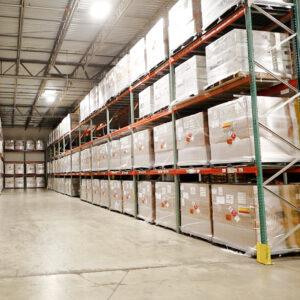
If your accumulation area feeds into export or long-distance shipments, staging matters. Our hazmat warehousing in Miami keeps regulated materials segregated and monitored rather than mixed into general racking, and our hazmat checklists give shipping floors a repeatable pre-dispatch review.
Transporter selection
Not every hazmat carrier can move hazardous waste. The transporter needs an EPA ID number, must sign the manifest, and must comply with the transfer facility time limits. Ask for the EPA ID and the hazmat registration certificate before the first load, not after. Our hazmat carrier network is vetted for both DOT and, where applicable, EPA credentials.
A pre-shipment checklist for hazardous waste
- Confirm generator status and that the waste determination is documented
- Verify the DOT classification against the actual waste stream, not the original product
- Assign EPA waste codes and confirm the receiving facility accepts them
- Complete the manifest with both EPA and DOT elements, including “Waste” in the shipping name
- Check container condition, closure, marking and accumulation dates
- Confirm the 24-hour emergency number answers
- Retain your copy and track the return copy from the designated facility
Frequently asked questions
Can the hazardous waste manifest serve as my DOT shipping paper?
Yes, provided it contains the required DOT elements — the basic description with UN number, proper shipping name (prefixed with “Waste”), hazard class and packing group, the quantity, the shipper’s certification and emergency response information. That is the purpose of the U.S. DOT description field on the manifest.
Do very small quantity generators need DOT hazmat paperwork?
Usually yes. VSQG status reduces obligations under EPA’s RCRA rules, but if the material meets the definition of a hazardous material in transportation, the 49 CFR requirements for classification, packaging, marking, labelling, shipping papers and training still apply.
What is an exception report?
If a generator does not receive a signed copy of the manifest back from the designated receiving facility within the timeframe set by EPA regulations, the generator must investigate and, if the copy is still not received, submit an exception report to EPA. It is the mechanism that makes cradle-to-grave tracking enforceable.
Recent Comments