
Plenty of logistics companies will say yes to hazmat. Far fewer are actually built for it — with the certified staff, rated storage, and documentation capability that dangerous goods demand. The difference doesn’t show up in the sales call; it shows up the first time a shipment gets inspected, rejected, or delayed. If you’re evaluating a hazmat 3PL in Miami or anywhere in South Florida, these ten questions will surface the real capability fast.
The ten questions
1. Who does your DG documentation, and where do they sit? A real hazmat 3PL has trained documentation specialists on staff — not a broker forwarding your paperwork to a carrier and hoping. Ask whether they can prepare IATA Shipper’s Declarations and IMDG DG declarations in-house, and whether they can do it on site at your facility when needed.
2. What training do your warehouse and dispatch staff hold? DOT requires hazmat employee training every three years; IATA and IMDG have their own cycles. Ask to see the training matrix, not just a yes.
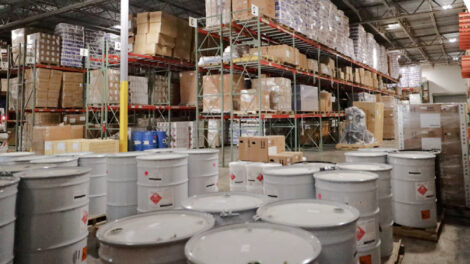
3. Is your warehouse actually rated for hazmat storage? Fire suppression appropriate to the classes stored, segregation-aware racking, spill containment, security, and the local permits to match. A general warehouse that “takes some hazmat” is a liability. Compare against a purpose-built hazmat facility.
4. Which classes will you NOT handle? The honest answer is never “we take everything.” A provider that knows its limits — and says so — is one that understands the regulations.
5. Can you repack and remediate non-compliant freight? When a shipment arrives in damaged or non-spec packaging, you need repacking capability locally, not a two-week round trip to the supplier.
6. What’s your relationship with MIA, Port of Miami, and Port Everglades? South Florida’s advantage is gateway proximity — but only if your 3PL knows the DG cutoffs, inspection practices, and drayage patterns of each facility.
7. How do you quote — one number or line items? Insist on seeing base freight, hazmat surcharges, packaging, documentation, and accessorials separately. Opaque quotes hide rework costs.
8. What happens when something goes wrong? Ask for the incident playbook: who gets called, how spills are handled, how corrective actions are documented. Hesitation here is disqualifying.
9. Can you support training for OUR team? Your dock staff and shipping clerks carry legal responsibilities too. A 3PL that offers hazmat training courses is invested in fewer errors on both sides.
10. Who are your references in our commodity? Chemicals, batteries, aerosols, cosmetics — each has quirks. Talk to a customer shipping something like yours.
Red flags worth walking away from
A “hazmat fee” with no visible hazmat capability behind it. Reluctance to show certifications or training records. No physical hazmat storage of their own. Quotes that undercut everyone by a suspicious margin — usually the compliance corner is what got cut. And any suggestion that paperwork can be “sorted out later”; in dangerous goods, later means a rejected shipment or a violation.
Why shippers pick Go Hazmat
Go Hazmat is a hazmat-first operation: TSA-approved, safety-certified staff, dedicated dangerous goods warehousing minutes from Miami’s airport and seaports, in-house and mobile DG documentation, repacking, training, and an asset-based fleet for FTL and LTL moves. Put us through the ten questions above — start the conversation here.
Frequently asked questions
What’s the difference between a freight broker and a hazmat 3PL?
A broker arranges transportation with third-party carriers; a hazmat 3PL adds owned capability — certified staff, rated storage, documentation, packaging, and compliance services. For dangerous goods, that owned capability is what prevents and fixes problems.
Does a 3PL need special certification to handle hazmat?
The company must register with PHMSA as required, and every hazmat employee needs current DOT training, with IATA and IMDG credentials for air and ocean work. Facilities also need local fire and environmental permits for hazardous storage.
Why does gateway proximity matter for a hazmat 3PL?
DG freight faces earlier cutoffs and more inspections than general cargo. A 3PL located minutes from MIA and the seaports can recover from a missed cutoff or failed inspection in hours instead of days.

Recent Comments