


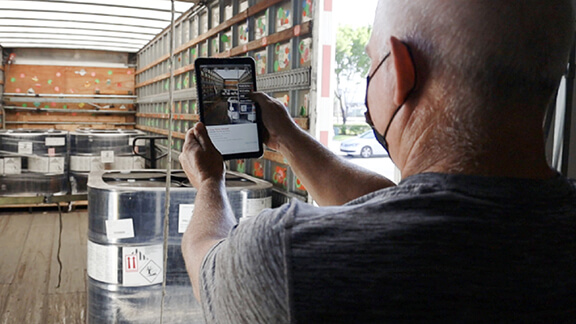
Corrosives are deceptively common freight. Battery acid, drain cleaners, pool chemicals, descalers, etching solutions, and industrial cleaning concentrates all move daily as Class 8 dangerous goods — and they punish sloppy packaging more visibly than almost any other class. A leaking drum of caustic doesn’t just cost you a shipment; it can damage other freight, equipment, and people.
Here’s how Class 8 works across ground, air, and ocean, and how South Florida shippers can keep corrosive freight moving without incident.
What is a Class 8 corrosive?
Under 49 CFR 173.136, a Class 8 material is a liquid or solid that causes full-thickness destruction of human skin at the site of contact within a specified observation period, or one that corrodes steel or aluminum at a defined rate. Familiar entries include UN1830 (sulfuric acid), UN1824 (sodium hydroxide solution), UN1789 (hydrochloric acid), UN2796 (battery fluid, acid), and UN3266 (corrosive liquid, basic, inorganic, n.o.s.).
Packing groups reflect severity: PG I for materials that destroy skin within a short exposure, down to PG III for the mildest regulated corrosives. As always, the packing group drives packaging performance, quantity limits, and mode restrictions.
Packaging that survives corrosives
Corrosives attack packaging from the inside, so chemical compatibility matters as much as UN performance rating. Acids typically ship in polyethylene drums, PE jerricans, or glass inners; strong oxidizing acids need specific liner systems; caustics have their own compatibility charts. A UN 1H1 poly drum that passes drop tests can still fail in transit if the resin isn’t rated for the product.
Combination packagings need tight closures, absorbent material where required, and orientation arrows. Every package carries the Class 8 label plus the proper shipping name and UN number. If your product arrived from a supplier in questionable packaging, Go Hazmat’s repacking service can transfer it into compliant UN packaging at our Miami facility before it moves again.
Segregation: keep acids away from alkalis (and much else)
Class 8 is where segregation errors happen most. Acids and alkalis react violently with each other, and many corrosives are incompatible with Class 3 flammables, Class 5.1 oxidizers, and Class 6.1 toxics. By ocean, the IMDG Code assigns segregation groups (SGG1 acids, SGG18 alkalis) that determine separation inside containers and aboard the vessel. By ground, 49 CFR 177.848 restricts what can load next to Class 8 in the same trailer.
Practical rule: never assume two corrosives can ride together because they share a hazard class. Check the segregation requirements or ask a specialist — our hazmat consultation team reviews load plans for mixed-class freight daily.
Mode-by-mode notes
By ground, Class 8 placards are required at 1,001 lbs aggregate gross weight. By air, IATA caps inner and package quantities tightly — many PG I corrosives are forbidden on passenger aircraft and severely limited even on freighters, and hydrofluoric acid and a handful of others are barred outright. By ocean, expect stowage category requirements, mandatory DG declarations, and container inspections at Port of Miami and Port Everglades; corrosives riding with reefer cargo or foodstuffs draw extra scrutiny.
Documentation is identical in spirit across modes: proper shipping name, class, UN number, packing group, quantity, packaging description, and emergency contact. Errors in any field can hold the freight.
Handling corrosives in South Florida
Go Hazmat stores, segregates, repacks, and ships Class 8 freight from our hazmat-rated Miami warehouse, with certified staff, spill containment, and acid/alkali separation built into the racking plan. Whether it’s a pallet of battery fluid headed to the Caribbean or drums of caustic for a Broward manufacturer, request a quote and we’ll route it compliantly.
Frequently asked questions
What makes a material Class 8?
A material is Class 8 if it destroys human skin at the contact site within a defined exposure period, or corrodes steel or aluminum faster than 6.25 mm per year at 55 °C. Classification data comes from the SDS and supplier test data.
Can acids and alkalis ship in the same container?
Often not, and never without checking segregation rules. Under the IMDG Code, acids (SGG1) and alkalis (SGG18) generally require separation, and even by ground the reaction risk makes co-loading a bad practice unless the specific products are verified compatible.
Do corrosives require placards by truck?
Yes — Class 8 placards are required when 1,001 lbs or more aggregate gross weight of corrosive materials is loaded, and for any bulk packaging regardless of weight.