


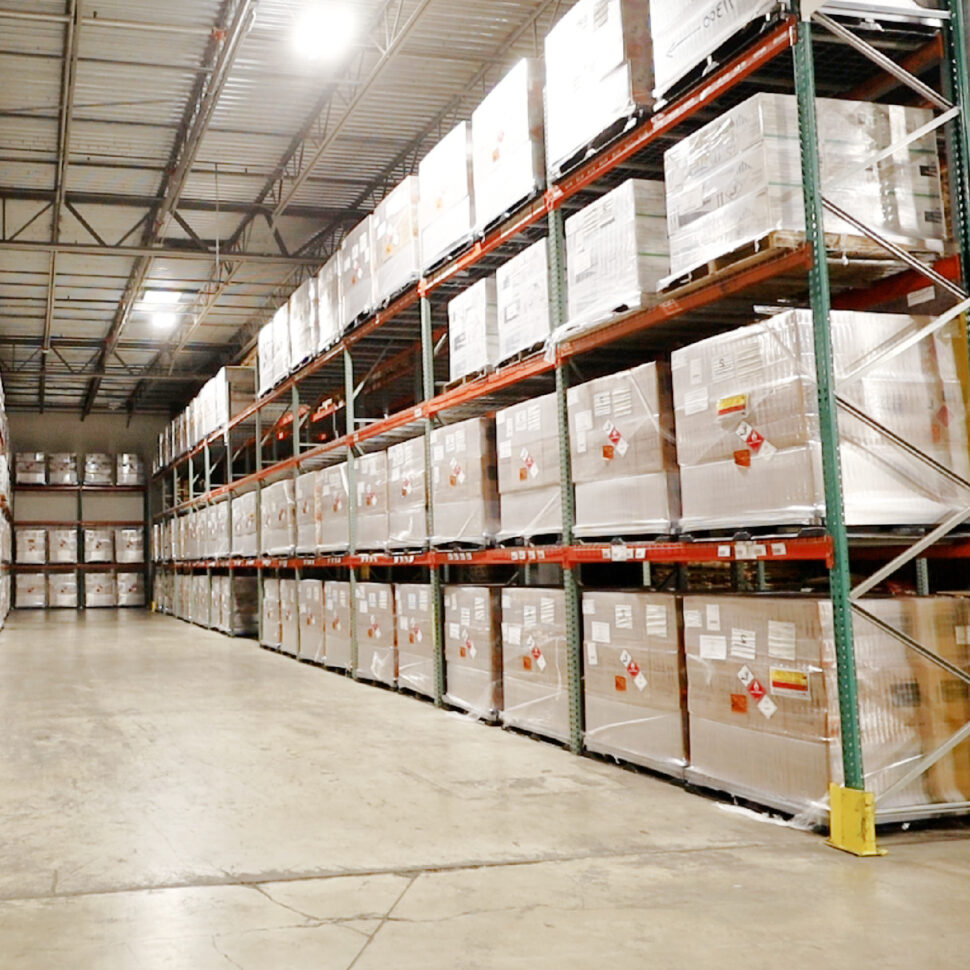
Class 4 dangerous goods get less attention than flammable liquids or corrosives, but they cause a disproportionate number of transport incidents when handled incorrectly. The class covers three distinct hazard types — a flammable solid, a spontaneously combustible material, and a water-reactive substance each fail in a different way if packaging, temperature, or segregation isn’t right. If you ship metal powders, matches, calcium carbide, activated carbon, or self-reactive chemicals, it’s worth knowing which subdivision you’re dealing with before building a shipment.
This guide walks through the three Class 4 divisions, common UN numbers, and how packaging and segregation requirements differ between air and ocean movement. Always verify current classification, packaging, and segregation requirements against the latest edition of 49 CFR, the IATA Dangerous Goods Regulations, and the IMDG Code, since entries and special provisions are revised periodically.
4.1 — Flammable solids and self-reactive substances
Division 4.1 covers solids that are readily combustible or can cause fire through friction, plus self-reactive substances that can decompose exothermically even without an external ignition source, and certain desensitized explosives. This subdivision includes some of the most commonly shipped Class 4 commodities:
- UN1944 / UN1945 — Matches, strike-anywhere and safety types
- UN1325 — Flammable solid, organic, n.o.s.
- UN2956 and related entries — Self-reactive substances (require temperature control for many types)
- UN3175 — Solids containing flammable liquid, n.o.s.
Self-reactive substances within 4.1 are further divided into Types A through G by how readily they decompose, and many types require controlled temperature transport with a defined control temperature and emergency temperature on the shipping papers. Missing or exceeding that window during transit is a common compliance failure in this subdivision.
4.2 — Spontaneously combustible materials
Division 4.2 covers substances liable to spontaneous heating under normal transport conditions, or that heat up on contact with air and can then ignite. This includes pyrophoric materials that ignite within minutes of air exposure, as well as self-heating substances that need longer exposure or bulk quantities to reach ignition.
- UN1383 — Pyrophoric metal or alloy, n.o.s.
- UN2846 — Cerium, turnings or gritty powder
- UN1362 — Carbon, activated
- UN2793 — Ferrous metal borings, shavings, turnings, or cuttings
Packaging for 4.2 materials frequently depends on how tightly the product can be isolated from air and moisture — inert atmosphere packing, sealed liners, or specific fill limits are common conditions attached to the UN entry.
4.3 — Dangerous when wet (water-reactive)
Division 4.3 covers substances that react with water to emit flammable gases, sometimes in quantities and at rates that create an explosive atmosphere. This is the subdivision where a routine warehouse leak, condensation, or a wet dock during a South Florida storm can turn into a serious incident if packaging integrity isn’t maintained.
- UN1394 — Aluminum carbide
- UN1402 — Calcium carbide
- UN1418 — Magnesium powder or pellets
- UN3170 — Aluminum smelting by-products or aluminum remelting by-products
Packaging for 4.3 materials must exclude water ingress under normal transport conditions, and many entries require specific inner packaging, desiccants, or sealed metal drums rather than fiberboard or standard plastic containers.
Packaging and packing groups across Class 4
All three divisions are assigned a packing group (I, II, or III) reflecting the degree of danger, which drives the required packaging performance level. UN-specification packaging rated for the correct packing group and hazard division is non-negotiable for Class 4 — a package rated for a mild flammable solid won’t hold up against a pyrophoric or water-reactive fill. If you’re unsure how packing groups map to your options, our breakdown of packing groups PG I, II, and III explained and the overview of UN specification packaging codes cover how those ratings are built and marked. Many shippers outsource this step entirely — see our hazmat repacking and UN-spec packaging services for how it’s handled for Class 4 commodities.
Temperature control matters more here than most classes
Self-reactive substances in 4.1, and some 4.2 materials, are only stable within a defined temperature range. Shipping papers for temperature-controlled self-reactive substances must state the control temperature and emergency temperature, and carriers need to maintain that range through transit and any dwell time. In South Florida, ambient heat at a Miami-Dade or Broward warehouse dock, or inside a trailer sitting at MIA cargo or the Port of Miami during peak summer months, can push a shipment out of its control temperature window faster than in cooler climates. Facilities that can hold temperature-controlled hazmat freight properly, rather than leaving it on an uncooled dock, matter for this class specifically — see our temperature-controlled hazmat warehousing in Miami for how that’s managed.
Segregation basics
Class 4 materials carry meaningful segregation requirements from other hazard classes and, in some cases, from each other. Water-reactive 4.3 materials must stay away from moisture sources and firefighting water application in storage, which affects how they can be co-located with other freight. Oxidizers (Class 5.1) are a common segregation conflict with all three Class 4 divisions, since mixing a flammable or reactive solid with an oxidizer sharply increases fire risk. Review the applicable table against our hazmat segregation rules for ground transport before consolidating a load or warehouse slot.
Air versus ocean: what changes
The core hazard classification for Class 4 materials is consistent across modes, but acceptance and packing details differ:
| Factor | Air (IATA DGR) | Ocean (IMDG Code) |
|---|---|---|
| Acceptance | Many 4.1/4.2/4.3 entries are forbidden or restricted on passenger aircraft; cargo-only aircraft have separate limits | Broader acceptance, but stowage category and segregation on deck/below deck apply |
| Quantity limits | Generally lower per-package limits, especially on passenger aircraft | Higher package and container quantities generally permitted |
| Temperature control | Very limited carrier capability for controlled-temperature self-reactive substances | Reefer container stowage available for some temperature-controlled entries |
| Documentation | IATA DGR Shipper’s Declaration format | IMDG dangerous goods declaration and container packing certificate |
Because acceptance varies so much by mode and by specific carrier, confirming mode-appropriate documentation early avoids a shipment being rejected at the airline or terminal counter after it’s already been packed. A pre-shipment hazmat checklist built around the correct mode and division catches most of these gaps before freight leaves the warehouse.
Frequently asked questions
What’s the difference between 4.2 and 4.3 materials?
Division 4.2 covers substances that heat up and can ignite through contact with air (spontaneous combustion), while Division 4.3 covers substances that react with water to release flammable gas. Some materials present more than one hazard and may carry a subsidiary risk from a different division — always confirm the primary and any subsidiary classification against current regulations.
Do all Class 4 self-reactive substances need temperature control?
Not all of them, but many self-reactive substance types listed under 4.1 are only stable within a specific control temperature and emergency temperature range, which must appear on the shipping papers. Check the specific UN entry and special provisions in 49 CFR or the IATA DGR to confirm whether your product requires controlled transport.
Can Class 4 dangerous goods be shipped through Miami’s air and ocean gateways?
Many Class 4 materials can move through Miami International Airport cargo facilities, PortMiami, or Port Everglades, but acceptance depends on the specific UN number, packing group, and carrier restrictions for that mode. Confirming acceptance and documentation requirements before booking avoids delays at the terminal.