


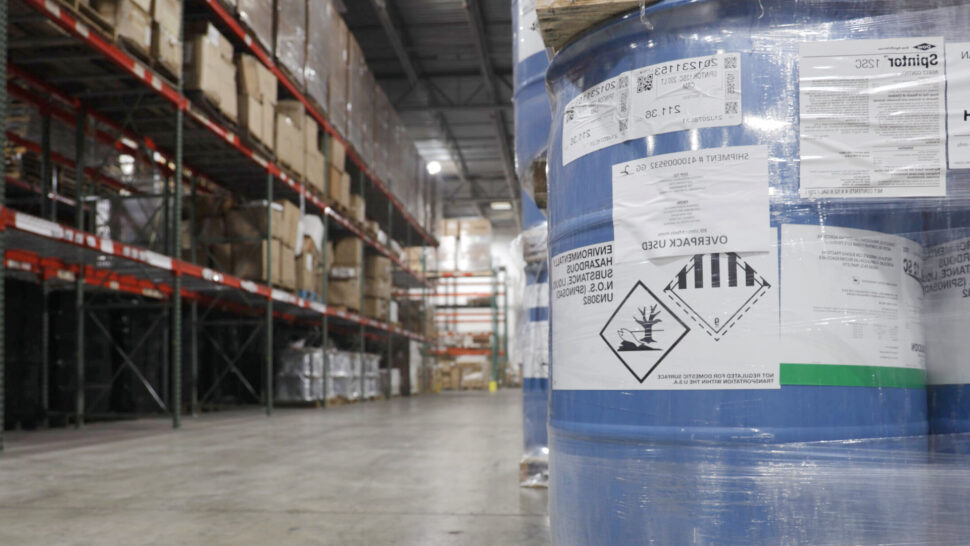
Parcel carriers are familiar, convenient and fast to set up. Hazmat freight carriers are specialized, flexible and built for heavier loads. For regulated dangerous goods, choosing between them is not only about price. It is about what each network is actually allowed and willing to carry.
This guide compares the two so you can match your product to the right service. Always confirm current rules with the carrier, since parcel hazmat programs change.
How parcel carriers handle hazmat
National parcel networks generally have their own dangerous goods programs. Common features include:
- Restricted lists. Some hazard classes, quantities or UN numbers are prohibited or require prior approval.
- Contract or account requirements. Fully regulated hazmat often needs a signed agreement or dangerous goods account before you can tender.
- Packaging and labeling rules. These follow DOT, IATA and IMDG standards, with carrier-specific requirements added.
- Piece-based limits. Parcel service is built around boxes, not pallets; weight and size caps apply.
Where parcel works well: limited quantity shipments, consumer commodities (ORM-D transitions to ID8000 rules), small lithium-battery shipments that meet the small-battery provisions, and low-volume shipments of lightweight packages. If you ship these items, review our ID8000 consumer commodity guide.
How hazmat freight works
Hazmat LTL and truckload carriers are set up for palletized and heavy shipments, including fully regulated materials. They offer:
- Higher capacity. Pallets, drums, totes and bulk packaging are routine.
- Broader class coverage. Many carriers accept a wider range of hazard classes, though each has its own restrictions.
- Placarded transport for larger loads and dedicated trucks.
- Flexible service levels, from consolidated LTL to dedicated expedited loads.
The trade-off is more paperwork, more planning and, for small shipments, sometimes a higher per-package cost.
Side-by-side comparison
| Factor | Parcel carrier | Hazmat freight (LTL/FTL) |
|---|---|---|
| Typical shipment | Boxes, small packages | Pallets, drums, totes, large loads |
| Hazmat acceptance | Limited, often restricted | Broader, carrier-specific |
| Setup | Account or contract approval | Carrier acceptance per shipment |
| Delivery | Door-to-door, standard networks | Dock-to-dock or dock-to-door, accessorials possible |
| Documentation | Carrier forms plus regulatory papers | Bill of lading and hazmat shipping papers |
| Best for | Limited quantity, small batteries, consumer goods | Fully regulated, heavy, palletized loads |
When to move up to freight
Consider hazmat freight when:
- Your packages exceed parcel weight or size caps.
- The product is a hazard class or quantity the parcel carrier does not accept.
- You ship several boxes to one destination, where a single pallet is more efficient.
- You need tighter control, such as dedicated service or specific delivery windows.
- Your carrier has rejected a shipment or flagged repeated documentation errors.
For guidance on choosing between truck options, read hazmat LTL versus FTL.
When parcel is the smarter choice
Parcel can be the better choice when:
- Your shipments qualify as limited quantity and are small.
- You ship to many individual recipients, such as e-commerce customers.
- Your products fit the carrier’s approved list and you have the account in place.
If you sell online, see our post on shipping lithium batteries and chemicals for e-commerce.
Compliance does not change with the carrier
Whichever network you use, you remain responsible for classification, packaging, marking, labeling and documentation. A carrier acceptance does not fix a non-compliant package. Reviewing your process with a compliance partner is cheaper than correcting an enforcement action later. See common regulation violations for what to avoid.
Not sure which route fits?
GoHazmat helps South Florida shippers compare options, prepare compliant freight and coordinate carriers. Explore our hazmat services or get a quote.
Frequently asked questions
Can I ship fully regulated hazmat through a parcel carrier?
Sometimes, but usually only with an approved account and for materials and quantities the carrier allows. Many fully regulated shipments are better suited to hazmat freight.
Is hazmat freight always more expensive than parcel?
Not always. For heavy or multi-package shipments, consolidating onto a pallet can cost less per unit than shipping many parcels, though accessorial fees may apply.
Who is responsible if a carrier accepts a non-compliant shipment?
The shipper is responsible for correctly classifying, packaging, marking, labeling and documenting hazmat. Carrier acceptance does not remove that responsibility.